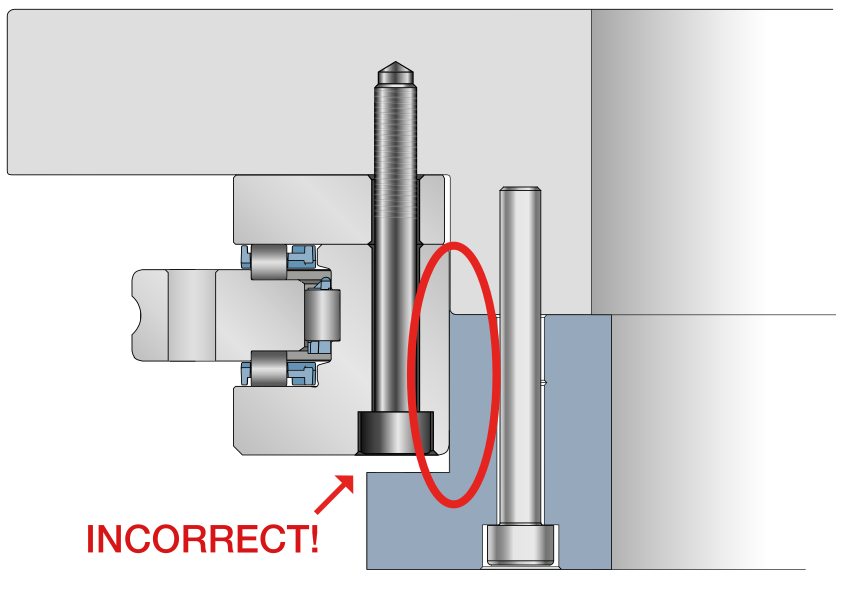
Whole-Surface Support of at Least One Flat Surface and the Bearing Bore
The preload in the bearing is generated through the inner ring screw connection. Due to the high preload forces, the rings deform. These deformations can be reduced or avoided by the adjacent construction. After being fixed in place with the screws, the bearing has a defined preload.
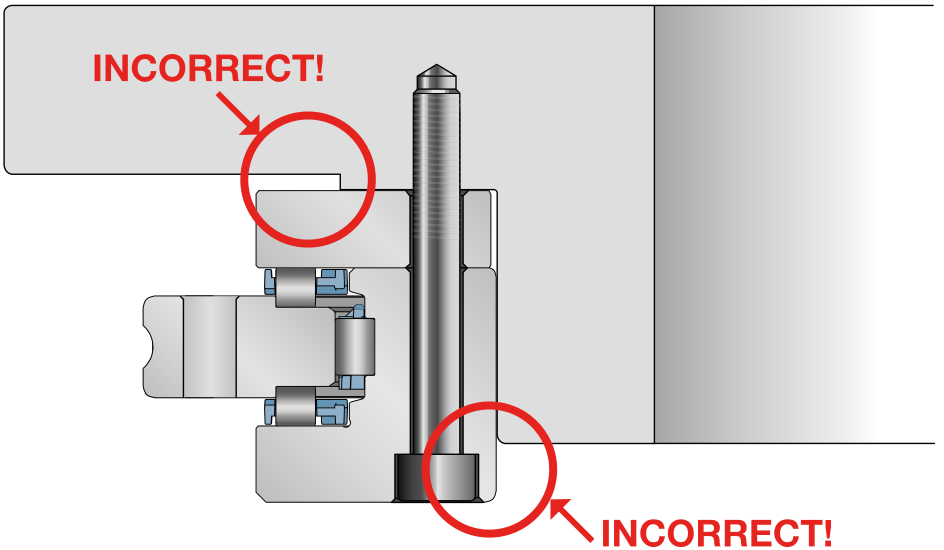
All AXRY bearings are designed and calculated based on this principle. Deviating adjacent constructions can lead to a loss of rigidity and running accuracy, or to a severe increase in friction. Bearing types with a more flexible design, such as AXDR and AXCR, help to reduce this problem.
If the preload is applied via a screwed-in non-ferrous metal ring, ensure that the preload force is applied uniformly to the bearing, e.g. by a steel ring that is screwed in together with the ring.
Edge Rounding / Radii
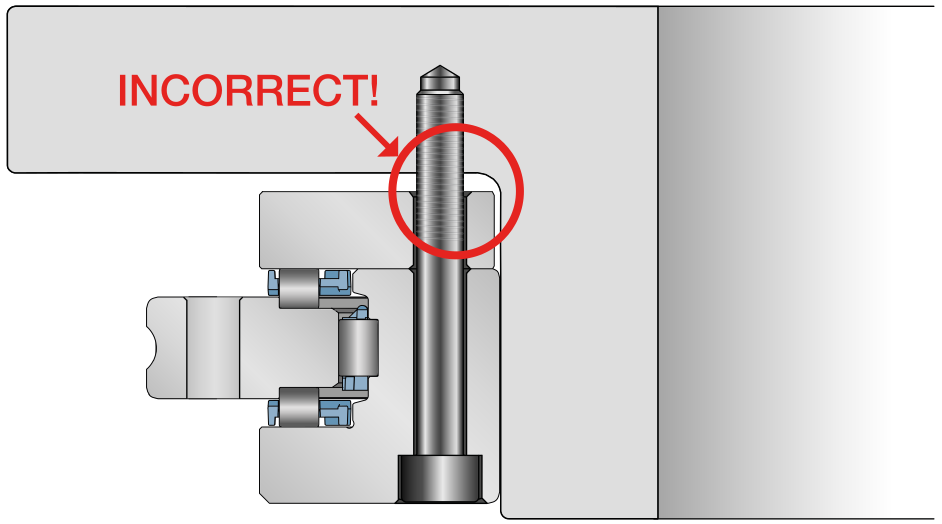
Oversized radii in the connecting parts prevent the bearing from being correctly tightened on the shaft, or prevent the bearing from lying flat in the housing. The result is deformation of the bearing.
Perpendicularity / Cylindrical Shape and Roundness of the Shaft
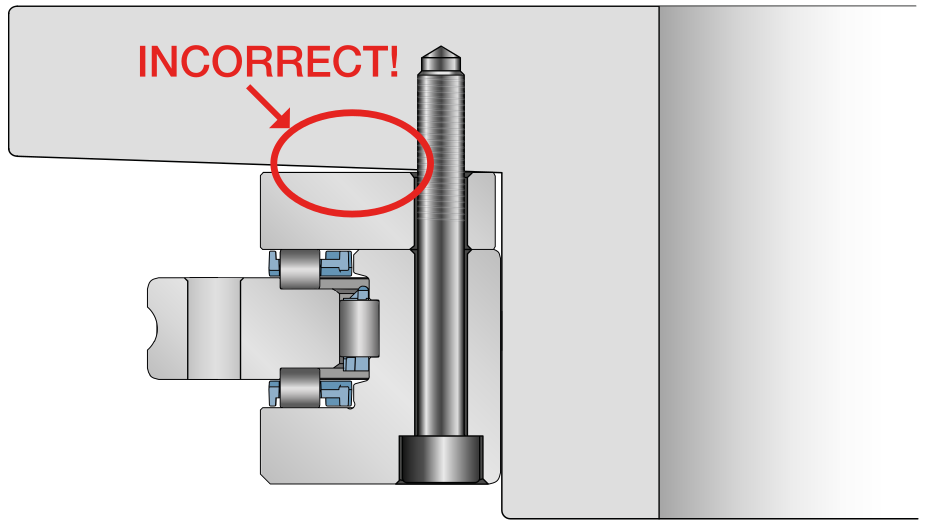
Incorrect form tolerances lead to undefined running conditions. Deformation and poor support of the bearing may occur.
Press Fit of Shaft
The press fit causes expansion of the inner ring and thus an increase in the radial preload. The higher the requirements on accuracy and speed, the more precisely the fit must be tailored. In highly dynamic or high-precision applications, this is ensured through individual pairing of the bearing with the connecting parts. The exact connection dimensions are therefore listed in the accompanying inspection report.
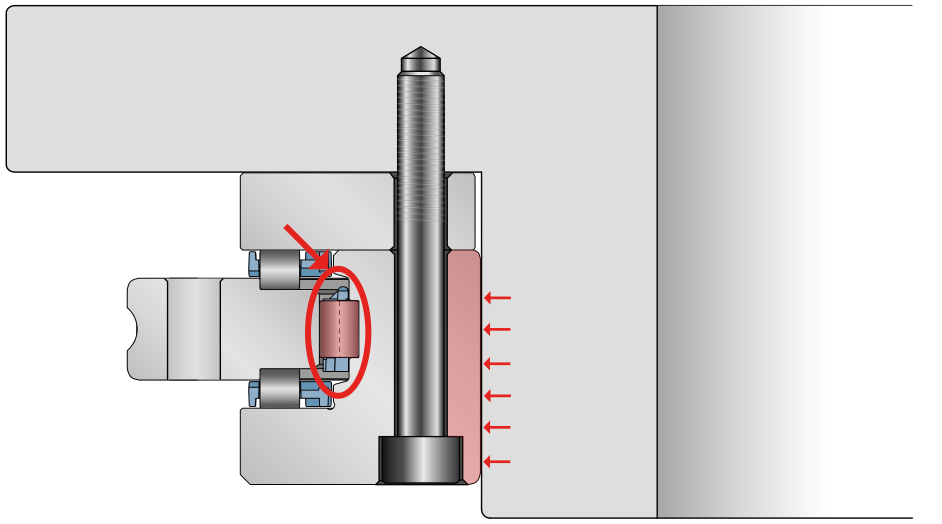
Clearance Fit of Shaft
The rotating ring should be supported by a transition fit to avoid displacement between the rotating table and the bearing. Otherwise, a clearance fit may increase the radial runout. Only in this case is the radial running accuracy of the bearing on the table reproducible. This also applies to applications in which the outer ring rotates.
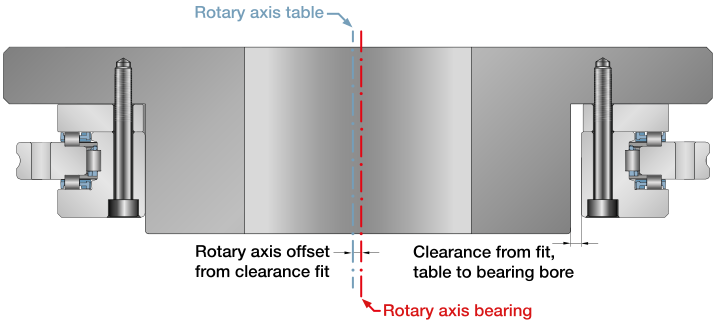
Avoid Double Centering
The bearing requires the largest possible whole-surface support in the area of the bearing bore. Further centering within the bearing bore should be avoided. If this cannot be avoided in the design, the additional centering areas must be as short as possible and have more clearance.
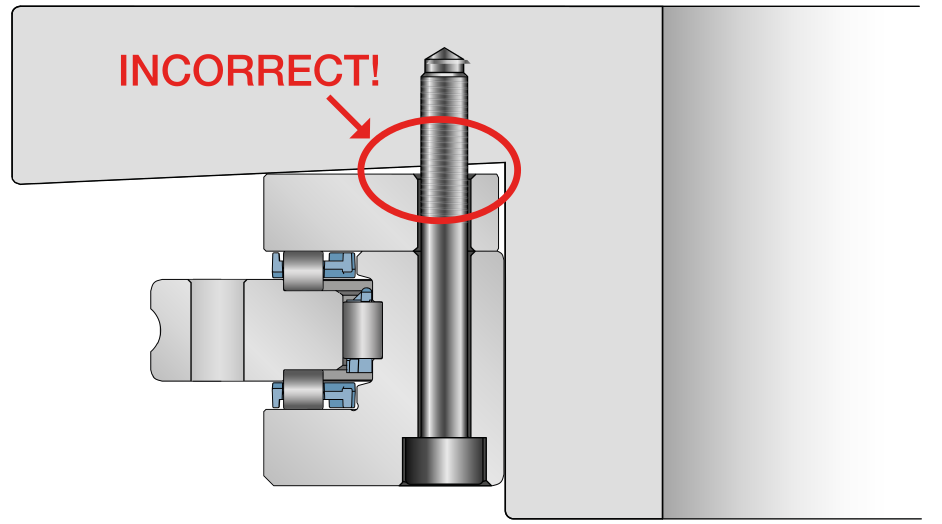
Fastening Thread in the Adjacent Construction
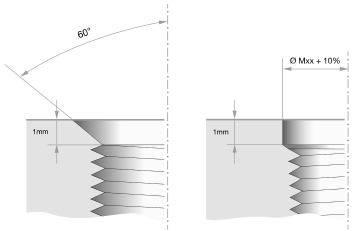
In order to avoid deformation of the screw-on surface when tightening the fixing screws, all fixing threads should be drilled out accordingly. We recommend 120° counterbores or cylindrical countersinks with a diameter 10% larger than the nominal thread diameter. The total countersink depth should be at least 1 mm. All countersinks must be clean and absolutely burr-free.