Rotary Axis Design
High-speed rotary axes require careful consideration of eccentricity around the rotation axis.
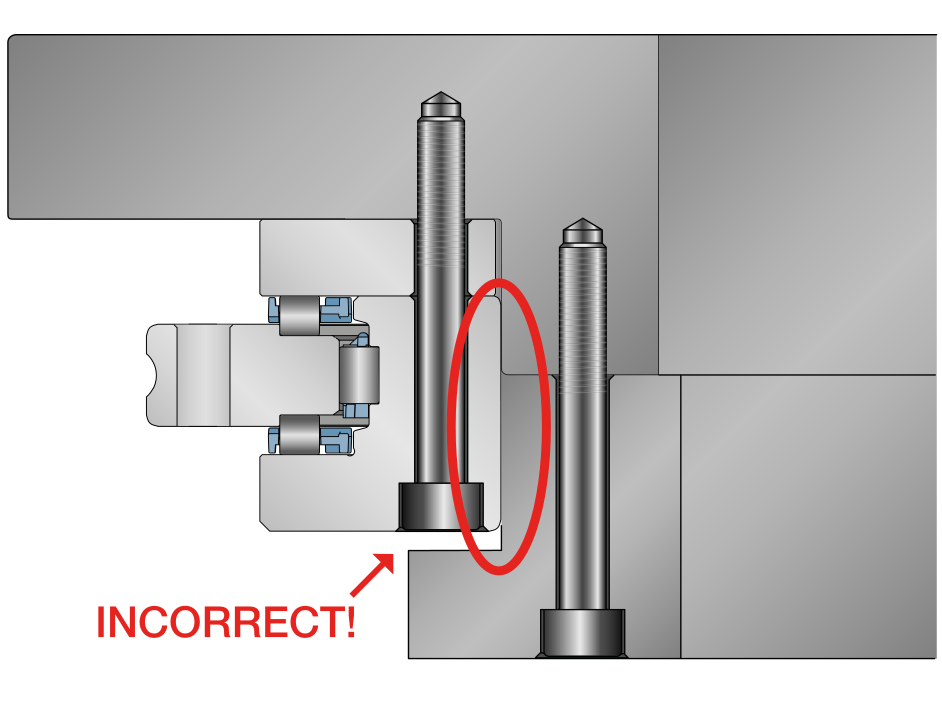
Avoid Multiple Centering
Form-fit multiple centering via the bearing bore should be avoided, as this can distort the bearing and increase friction. Positive-locking centering of connection parts is recommended to minimize these issues.
Bearing Preload
The bearings arrive radially and axially play-free and preloaded after assembly and complete bolting. Preload is a critical factor in achieving specified rigidity but also produces friction torque.
- Bearings are factory-set with appropriate preload
- After complete assembly, bearings are radially and axially play-free
- Preload values affect rigidity and friction torque
Temperature Differential Management
Temperature differences between shaft and housing significantly influence radial bearing preload. Proper temperature management is essential for bearing performance.
Effects When Shaft Temperature is Higher
- Increases friction and surface pressure
- Reduces bearing service life
- May cause overheating failure
Effects When Housing Temperature is Higher
- Reduces preload and rigidity
- May cause increased bearing clearance
- Affects positioning accuracy
Recommendation
Efficient cooling enables stable operating temperatures with minimal fluctuations. A separately-controllable cooling of the inner and outer rings is generally helpful. For high-speed, extended duty cycle applications, temperature monitoring via sensor bores is recommended.
Cooling Design
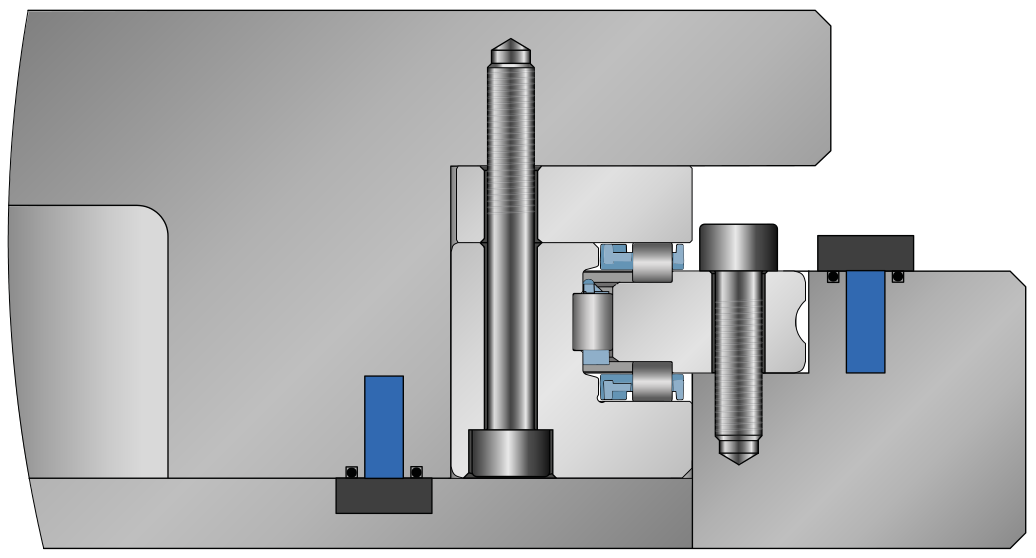
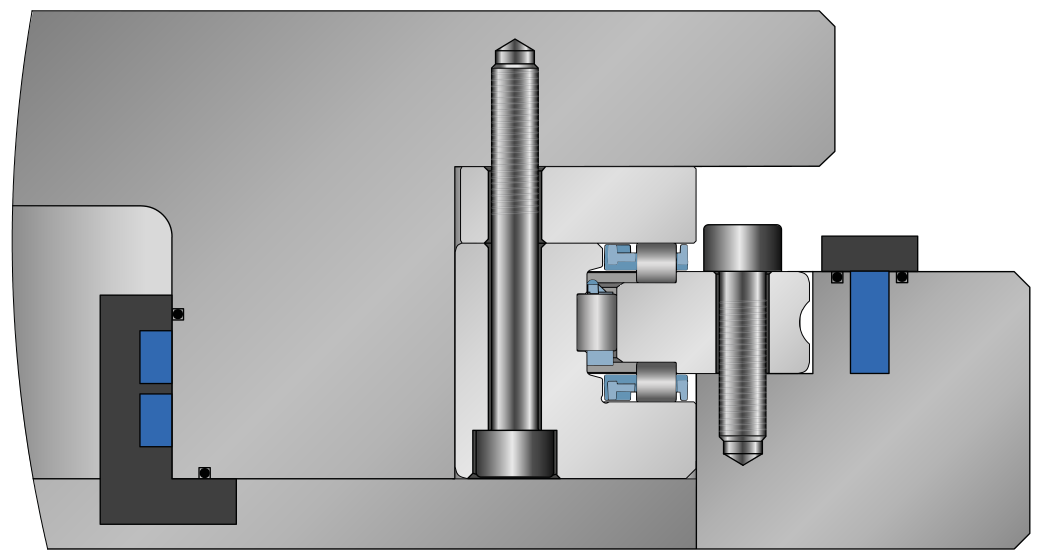
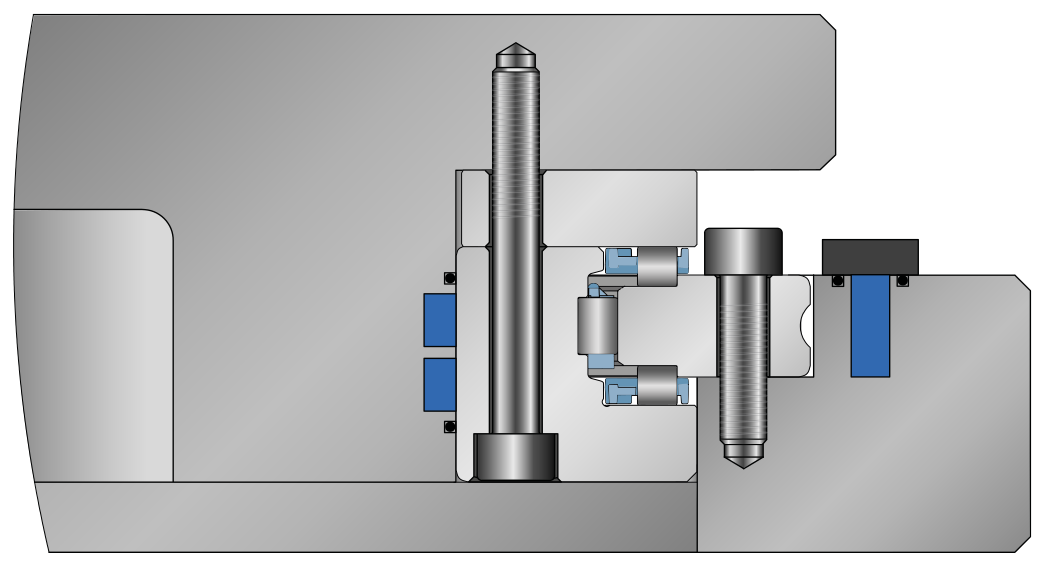
For achieving limiting speeds with extended duty cycles, circulating oil cooling on both inner and outer rings is recommended.
Inner Ring Rotation Cooling
For NGS bearings with inner ring rotation, the following cooling configurations are recommended:
Outer Ring Rotation Cooling
For NGS-SBI bearings with outer ring rotation, the following cooling configuration is recommended:
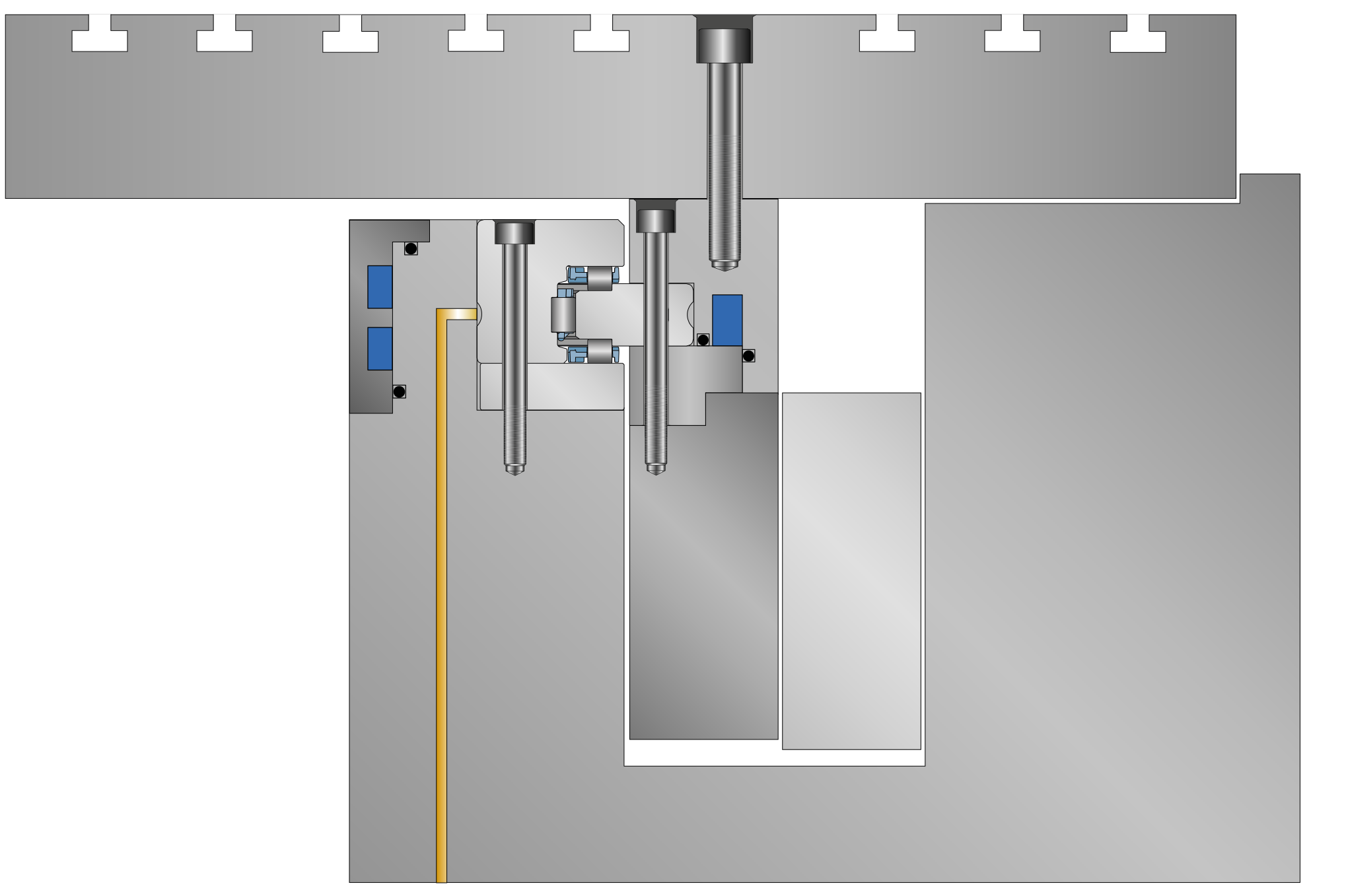
Cooling Design Key Points
- Inner and outer rings should have independently controllable cooling systems
- Coolant flow rate should be calculated based on thermal load
- Prevent coolant leakage into the bearing interior
- Cooling channel design should ensure uniform heat conduction
At elevated speeds during extended operation, controlled cooling of the stationary and rotating components is strongly recommended to limit temperature variations between bearing rings.
Unbalance and Eccentric Loads
Eccentric components generate high additional forces on the bearing, which can be particularly problematic at high speeds.
Effects
- Additional dynamic loads during high-speed operation
- May cause vibration and noise
- Affects machining accuracy and surface quality
- Accelerates bearing wear
Recommended Measures
- Use automatic unbalance correction systems
- Set residual unbalance limits
- Regular inspection and unbalance correction
- Avoid mounting components with large eccentric masses
Important Note
High acceleration and strong braking processes can introduce additional friction into the system through moments of inertia. Special attention should be paid to unbalance control in high-speed applications.
Related Sections
- Adjacent Construction Design - Detailed design requirements and tolerances
- Shaft Fits - Shaft fit tolerance selection
- Housing Fits - Housing fit tolerance selection
- Bearing Commissioning - Run-in and verification procedures